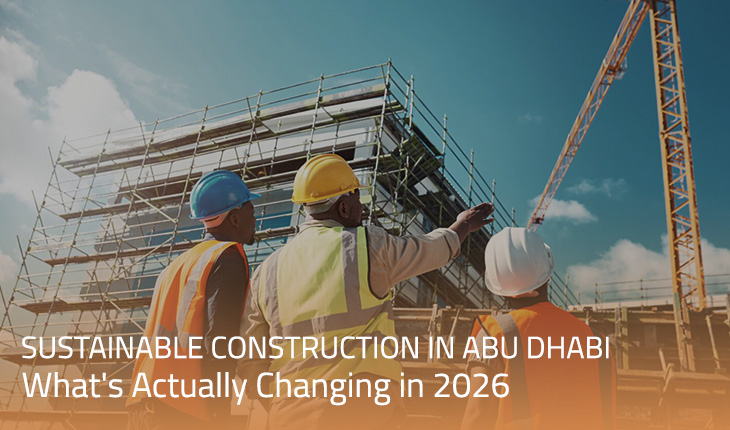
Sustainable Construction in Abu Dhabi: What’s Actually Changing in 2026
Here’s something we’ve noticed on our own sites lately: nobody argues about solar panels anymore. A few years ago, sustainability came up in client meetings and then quietly got cut once budgets tightened. Now it’s in the plans from day one, because that’s what the market expects.
We’re The Mob Construction, and we build in Abu Dhabi every day, so we’ve had a front-row seat to the shift. If you’re a developer, an investor, or just wondering why every new project talks about green building, here’s the full picture.
What Does “Sustainable Construction” Actually Mean?
FForget the marketing language for a second. Sustainable construction means building smarter: less energy, less water, and materials that don’t cost the planet (or your wallet) more than they need to. It comes down to a handful of decisions that add up:
- Operating energy: how much power the building needs to run day to day
- Construction carbon: the footprint of the build itself, not only the finished product
- Water: where it comes from and where it goes afterward
- Materials: recycled, or at least low-impact
- Waste: how much debris gets reused instead of dumped
- Indoor air quality: what people actually breathe
- Durability: whether the building holds up or needs repairs by year five
In short, it’s building with the next 30 years in mind, not just opening day. The earlier these choices are made, the cheaper they are.
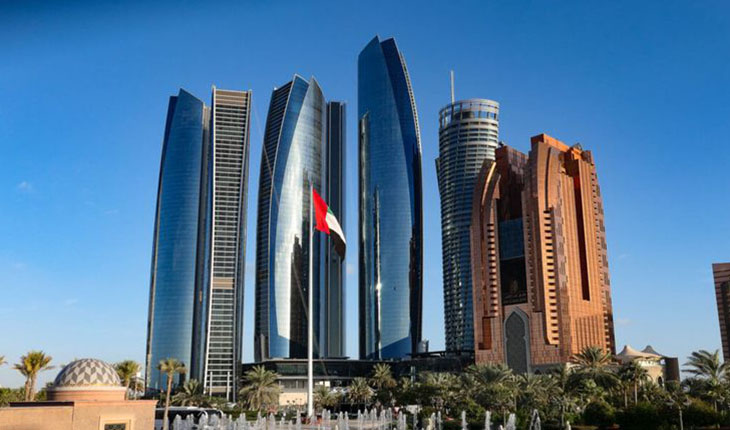
Why Is Abu Dhabi Pushing This So Hard Right Now?
A few things are happening at once.
1. Policy. The UAE has committed to net-zero emissions by 2050, and buildings are one of the key sectors in its national strategy. Expect more efficient buildings, more renewables, and stricter green standards.
2. Energy and water use. Buildings consume a lot of both, so the industry is leaning into:
- Proper insulation, not just “good enough”
- HVAC that doesn’t run flat out all day
- LED and smart lighting
- Management systems that adjust to how the building is really used, instead of running the same way 24/7
3. Investors. This may be the bigger driver. Buyers and tenants increasingly choose properties partly on efficiency, because lower utility bills and stronger long-term value are hard to argue with. It also helps with ESG compliance, and it appeals to international tenants who already have their own sustainability targets to meet.
Let’s Talk About Estidama for a Second
If you build anything in Abu Dhabi, you’ll meet Estidama quickly. It’s the emirate’s sustainability framework, and its Pearl Rating System scores projects from one to five pearls across integrated development, natural systems, livable buildings, water, energy, and materials.
Here’s what makes it different from certifications elsewhere: it isn’t optional. To get a building permit in Abu Dhabi:
- Privately funded projects need at least 1 Pearl
- Government-funded projects need at least 2 pearls
So it’s less “nice bonus” and more “this is how you get your permit.” Ratings are assessed at both the design and construction stages, which is why we plan for the target before drawings are finalized. Fixing a credit late costs far more than designing for it early.
What Actually Goes into a Sustainable Build
Five things show up on nearly every project done right:
Indoor environmental quality: the one people notice without knowing why. Better airflow, more natural light, and comfort that doesn’t depend on cranking the AC to make up for poor design.
Energy efficiency: better windows, efficient HVAC, LED lighting, smart controls, and, more and more, solar panels as standard rather than a paid upgrade.
Water efficiency: essential in a desert. Think low-flow fixtures, greywater reuse, and smarter irrigation and landscaping that survives without constant watering.
Materials: low-carbon concrete, recycled steel, and certified timber, sourced locally where possible to cut transport emissions, plus low-VOC products so indoor air doesn’t feel stale or synthetic.
Waste: recycling what gets torn out, reusing what can be reused, and tighter site management so less ends up in a skip.
Who Benefits from All This?
Developers: lower running costs, higher property values, easier approvals, and stronger investor interest.
Buyers and tenants: smaller electricity and water bills, better air quality, more comfortable homes, and better resale value later on.
The environment: less waste, fewer emissions, and real progress toward the UAE’s goals.
What to Keep an Eye on in 2026
A few trends are picking up pace this year:
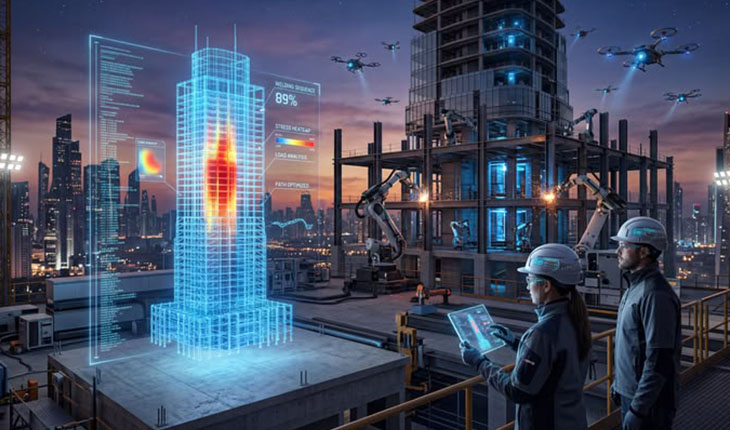
- AI-driven building management is moving from a premium feature toward a standard.
- Real-time energy tracking shows exactly where the power goes.
- Solar is spreading to more project types, not only flagship ones.
- Low-carbon materials are getting easier to source.
- Prefabrication and modular construction are gaining ground to save time and cut waste. Eagle Hills reported assembling a 15-floor residential building in about 12 days using modular units, according to Khaleej Times, though those claims come from the developer.
None of these is a gimmick. Each one either cuts running costs or cuts waste, and usually both.
Where This Is All Heading
Sustainable construction is no longer a side conversation in Abu Dhabi real estate. It’s part of the main decision. People don’t just ask “where” and “how much” anymore. They ask about running costs, long-term value, and whether a building is actually built to last.
At The Mob Construction, that’s simply how we work now. Not because it looks good on paper, but because in this market it’s the smarter way to build.